
Unearthing the Fascinating Legacy of the Spice Trade in the Spice Islands
- Matthew Riter
- Oct 29, 2025
- 4 min read

Updated: Dec 10, 2025
The Spice Islands, known today as the Maluku Islands in Indonesia, are not just beautiful in their scenery but are also steeped in a captivating history. These islands were once at the center of the global spice trade, drawing traders, explorers, and empires eager to lay claim to the valuable resources that grew there. This post takes a closer look at the origins, key players, and the lasting effects of the spice trade in this remarkable region.
The Origins of the Spice Trade
Spices have fascinated people for thousands of years. They have been used in cooking, medicine, and even religious rituals. The Spice Islands became particularly famous for their nutmeg, cloves, and mace, all of which were highly prized in Europe and Asia.
Trade routes linking these islands to the world started around the 1st century AD. Early Arab traders transported spices to the Middle East and Europe while keeping their origins secret to protect their profits. Before the 15th century, trade was relatively small-scale, but as demand surged, trade networks expanded significantly.
By the 15th century, European powers showed keen interest in the Spice Islands, leading to fierce competition for these resources. For example, during this period, nutmeg prices skyrocketed in Europe. It is reported that a pound of nutmeg was worth more than three times the average laborer's daily wage at the time.

Cloves, nutmeg, and mace being harvested in the Spice Islands
European Exploration and Colonization
The Age of Exploration in the 15th and 16th centuries marked a watershed moment in the spice trade. Portugal and Spain led the charge, searching for direct sea routes to the Spice Islands.
Vasco da Gama's voyage to India in 1498 opened vital sea routes to the East. This marked the beginning of Portugal's dominance in the spice trade. They established trading posts and forts, notably on Ternate, a key hub for spices. Historians estimate that by the early 1600s, Portugal controlled about 50% of the spice trade.
Meanwhile, the Spanish sought their slice of the pie. The Treaty of Tordesillas in 1494 divided newly discovered lands between Spain and Portugal, but both nations remained eager to control the Spice Islands, resulting in numerous conflicts. This intense rivalry ultimately led to the establishment of the Dutch East India Company in 1602, which would dominate the trade for over a century.

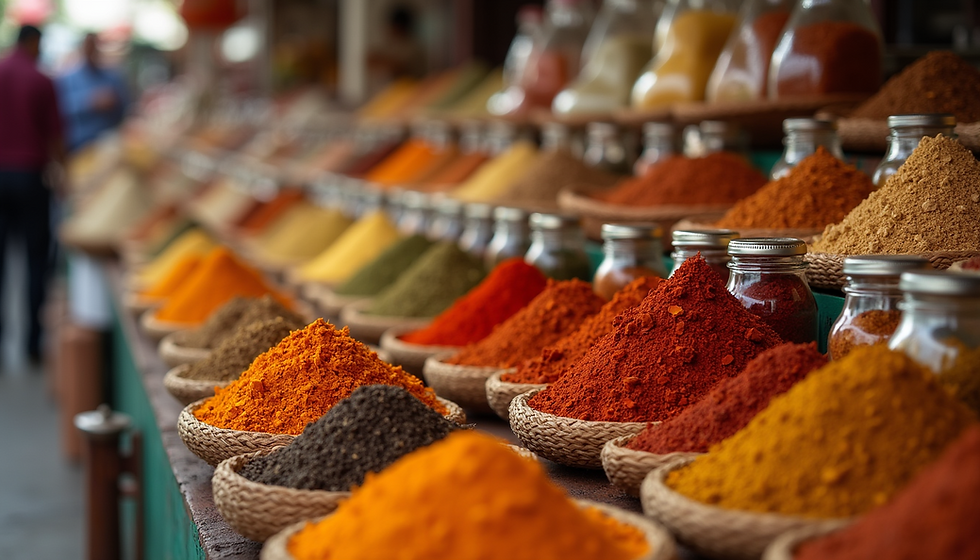
Cloves, nutmeg, and mace at a market in the Spice Islands
The Dutch East India Company and the Spice Monopoly
The Dutch East India Company, or VOC, dramatically changed the spice trade landscape. The Dutch government granted VOC a monopoly over the spice trade, enabling the company to control production and set prices.
The VOC employed a range of tactics to maintain its dominance, including military force and forming alliances with local rulers. The company took control of key islands like Ambon and Banda, known for their nutmeg and cloves. Estimates suggest that the VOC's control extended to about 90% of the global spice supply during its peak.
However, this dominance came at a steep price. Local farmers often faced harsh conditions as the Dutch imposed strict regulations and demanding quotas. While the spice trade generated immense wealth for the Netherlands, it led to significant suffering for the indigenous people of the Spice Islands.
The Decline of the Spice Trade
By the 18th century, various factors contributed to the decline of the spice trade. The emergence of new spice-producing regions, such as the Caribbean and India, started to erode the Spice Islands' dominance.
A shift in European demand also played a role, with commodities like sugar and coffee gaining popularity. Furthermore, by the late 1700s, the financial difficulties faced by the Dutch East India Company led to its dissolution in 1799. This development marked a decline in Dutch control over the region.
Despite these changes, the legacy of the spice trade endures. The Spice Islands continue to produce a variety of spices, and their rich history fascinates tourists and researchers from around the globe.

Spice Islands farm
The Cultural Impact of the Spice Trade
The spice trade profoundly influenced the cultures of the Spice Islands. The influx of foreign traders and colonizers led to a fusion of cultures, languages, and traditions.
Local communities adapted to the demands of the spice trade, altering their agricultural practices and social hierarchies. New ideas and technologies from Europe also changed local customs. For instance, the introduction of new farming techniques for spice cultivation improved yields significantly.
Today, the Spice Islands are a vibrant mix of cultures, reflected in festivals celebrating local spices and culinary traditions. Events such as the 'Bunga Kuning Festival' showcase the islands' rich heritage and attract visitors who come to experience their unique flavors.
Reflecting on the Spice Trade Legacy
The spice trade history of the Spice Islands is a mesmerizing story of exploration, exploitation, and cultural exchange. From ancient trade routes to the rise and fall of empires, the quest for spices has shaped historical narratives and economies across the globe.
Today, although the Spice Islands no longer dominate the global spice trade, their rich culture and history still invite exploration. The spices produced today, alongside the legacy of the sea trade, ensure that the islands remain a site of intrigue and inspiration for all who seek to understand the past.


Additionally, gait abnormalities, such as in-toeing or out-toeing, can arise as children learn to walk and explore their environment. While some gait patterns naturally kids podiatrist near me resolve over time, persistent irregularities may require professional attention to prevent long-term complications.
The spice trade article is very engaging because it explains the rich history and global impact of spices across cultures. It reminded me of history assignments where I had to manage heavy workload and deadlines. During that time, I wanted to do my Pearson course for me to stay updated with coursework while focusing on reading. Overall, it shows how trade history connects deeply with global development.
The exploration of the spice trade history is fascinating, especially how global exchange shaped culture and economies. Learning about the Spice Islands shows how trade influenced innovation and connection across regions. While analysing historical trade patterns in a data project, I wanted Artificial Intelligence assignment help online to structure my findings. It reminds me how technology today helps us better understand complex historical developments.
Pembelajaran Bahasa Indonesia Kelas 10 membantu memahami berbagai jenis teks seperti laporan, eksposisi, hingga biografi secara bertahap. Materinya disusun agar mudah diikuti dan relevan dengan kehidupan sehari-hari. Cocok sebagai referensi tambahan untuk memperkuat pemahaman. Mendukung kemampuan berbahasa yang lebih baik.
This platform’s jobs classifieds Pakistan section is a good option for job seekers. It brings different opportunities together, making it easier to find relevant openings in one place.